
AI voice technology continues to evolve rapidly, transforming how digital content is created, consumed, and distributed. One of the emerging tools in this space is GPT-SoVITS, a model that combines advanced speech synthesis with voice cloning capabilities. Many creators, developers, and businesses now ask a critical question: Is GPT-SoVITS good for English voice generation?
Understanding its performance, strengths, limitations, and real-world applications helps determine whether it meets modern English voice generation needs. This article explores GPT-SoVITS in depth, focusing on quality, usability, and practical use cases.
What Is GPT-SoVITS?
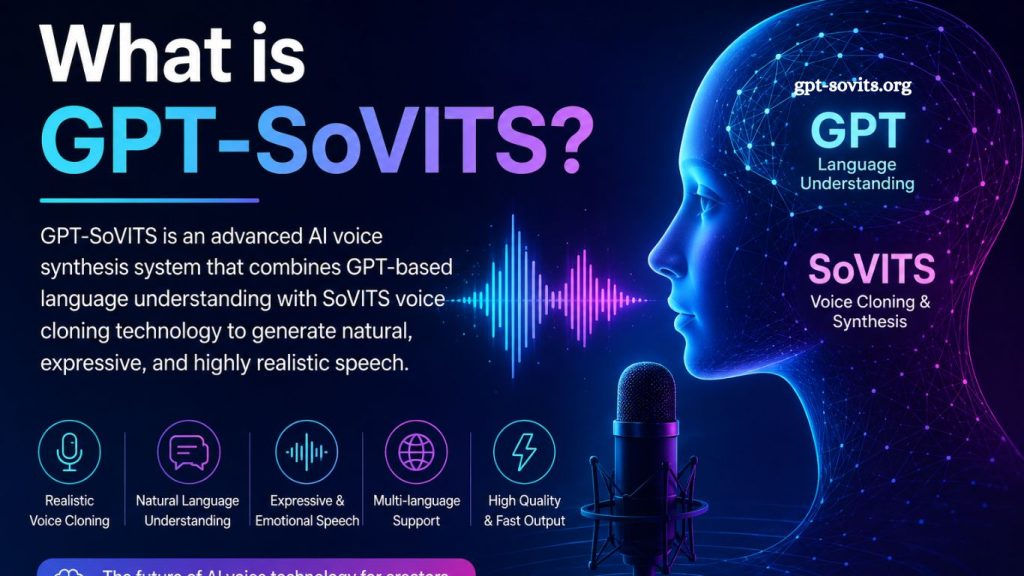
GPT-SoVITS is an AI-based voice synthesis system that generates realistic speech using deep learning. It integrates two powerful components:
- GPT-style language modeling for contextual speech prediction
- SoVITS (SoftVC VITS) for high-quality voice conversion and synthesis
This combination enables the system to generate speech that sounds natural, expressive, and more human-like than that of traditional text-to-speech engines.
The model is widely used in voice cloning, AI narration, dubbing, and content creation workflows where realistic speech output matters.
Read More: GPT-SoVITS Voice Cloning Audio Requirements Explained
English Voice Generation Capability
English voice generation remains a key benchmark for AI speech models due to its global usage and linguistic complexity. GPT-SoVITS performs strongly in this area when properly trained and configured.
Natural Sounding Speech
GPT-SoVITS produces fluid and human-like English speech. The model captures tone variation, pacing, and pronunciation more effectively than many older TTS systems. This makes it suitable for:
- Audiobook narration
- YouTube voiceovers
- Educational content
- Podcast automation
Speech output often sounds expressive rather than robotic, especially when high-quality voice samples are used during training.
Accent Adaptability
English includes multiple accents such as American, British, Australian, and Indian variants. GPT-SoVITS can adapt to these accents depending on the quality of the training data. A well-trained model can replicate regional pronunciation patterns with impressive accuracy.
This flexibility makes it useful for global content creators targeting different audiences.
Pronunciation Accuracy
GPT-SoVITS handles most English phonetics effectively. Complex words, technical terms, and conversational phrases are generally pronounced correctly. However, accuracy depends heavily on dataset quality and preprocessing.
Occasional mispronunciations may occur with uncommon names or niche vocabulary, especially without fine-tuning.
Strengths of GPT-SoVITS for English Speech
High Voice Realism
One of the strongest advantages lies in voice realism. The system produces speech that closely resembles natural human expression. Emotional tone, pauses, and rhythm are more convincing than those of standard text-to-speech engines.
Custom Voice Cloning
GPT-SoVITS supports voice cloning with relatively small datasets. Users can train the model using sample recordings and generate a personalized voice model. This feature is highly valuable for:
- Brand voice creation
- Digital assistants
- Character voice generation
- Content personalization
- Open-Source Flexibility
Many implementations of GPT-SoVITS are open-source, allowing developers to modify and optimize the system. This flexibility supports experimentation, customization, and integration into larger AI workflows.
Multilingual Support
Although this article focuses on English, GPT-SoVITS also supports multiple languages. The multilingual capability enhances its value for creators working in global markets.
Limitations of GPT-SoVITS
Training Data Dependency
Performance depends heavily on the quality and diversity of training data. Poor audio samples lead to unnatural speech output. Clean, well-labeled datasets are essential for achieving high-quality English voice generation.
Hardware Requirements
Training and inference may require significant computing resources, especially GPUs. Users without strong hardware may experience slower processing times or limited model performance.
Occasional Stability Issues
Some implementations may show instability in long-form speech generation. This includes inconsistent tone or minor audio artifacts in extended sentences.
Learning Curve
Set up and optimization require technical knowledge. Beginners may find configuration, dataset preparation, and fine-tuning challenging without guidance.
Comparison With Other Voice Models
GPT-SoVITS competes with several modern voice synthesis systems, including commercial and open-source tools.
Compared to Traditional TTS Systems
Traditional TTS engines like Google Text-to-Speech or Amazon Polly offer stability and ease of use. However, they often sound less natural and more robotic.
GPT-SoVITS provides superior expressiveness and realism, especially for creative applications.
Compared to Advanced AI Voice Models
Modern AI systems, such as neural-based speech generators, also produce high-quality output. GPT-SoVITS stands out for its voice-cloning efficiency and flexible training.
However, some commercial models may outperform it in consistency and production-level stability.
Practical Use Cases
Content Creation
YouTube creators and podcasters benefit from GPT-SoVITS by generating realistic narration without manually recording audio. This saves time and reduces production costs.
Audiobook Production
Narration quality allows for smooth audiobook generation. Emotional tone variation improves listener engagement.
Game Development
Developers use GPT-SoVITS to create character voices. Custom voice cloning enables unique identities for game characters.
Education and Training
E-learning platforms use AI-generated voices to create instructional content. Clear pronunciation supports better understanding for learners.
Marketing and Advertising
Brands generate voiceovers for promotional videos, advertisements, and digital campaigns with a consistent voice identity.
Optimization Tips for Better English Output
Use High-Quality Audio Samples
Clear recordings with minimal background noise significantly improve model training results.
Fine-Tune With Diverse Data
Including different speaking speeds, tones, and accents enhances realism and flexibility.
Preprocess Text Properly
Correct punctuation, spacing, and formatting improve pronunciation accuracy and natural flow.
Adjust Speech Parameters
Fine-tuning pitch, speed, and energy levels helps achieve more human-like delivery.
Frequently Asked Questions
Is GPT-SoVITS good for English voice generation?
GPT-SoVITS delivers a strong English voice quality with natural tone, clear pronunciation, and realistic speech when properly trained.
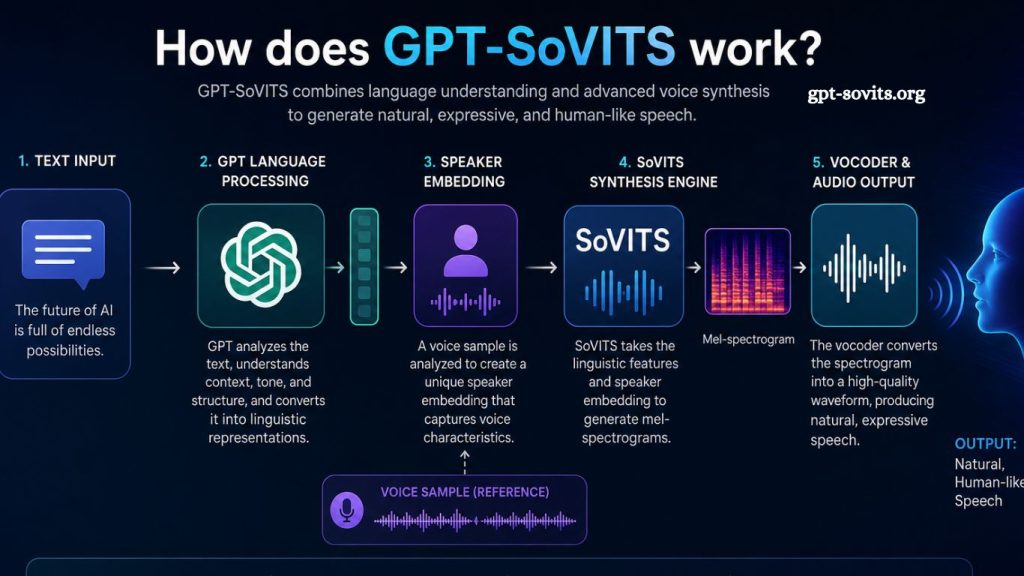
How does GPT-SoVITS generate English speech?
It combines GPT-based language modeling with SoVITS voice synthesis to produce expressive, human-like audio output.
Can GPT-SoVITS accurately clone an English voice?
Yes, it can clone voices effectively using quality audio samples, producing highly similar speech patterns and tone.
Does GPT-SoVITS support different English accents?
It can replicate accents such as American or British English, depending on the training data used.
What are the limitations of GPT-SoVITS for English voice generation?
It may require robust hardware, high-quality datasets, and a technical setup, with occasional inconsistencies in long speech.
Is GPT-SoVITS better than traditional text-to-speech tools?
It generally produces more natural, expressive speech than traditional robotic-sounding TTS systems.
Who should use GPT-SoVITS for English voice generation?
Content creators, developers, educators, and marketers benefit most from its realistic and customizable voice output.
Conclusion
GPT-SoVITS stands out as a capable solution for English voice generation, delivering natural-sounding speech with strong emotional expression and accurate pronunciation. Its ability to clone voices and adapt to different speaking styles makes it highly valuable for content creators, educators, and developers working in audio production.