Artificial intelligence has transformed how humans interact with machines, and voice synthesis is one of its most powerful breakthroughs. Among the latest innovations, GPT-SoVITS stands out as a cutting-edge system designed to generate highly realistic, natural-sounding speech. It combines advanced language modeling with deep voice conversion technology, enabling users to create lifelike voices from minimal input data.
This article explains GPT-SoVITS in detail, how it works, its key features, applications, and why it is becoming a major tool in modern AI voice generation.
Understanding GPT-SoVITS Technology
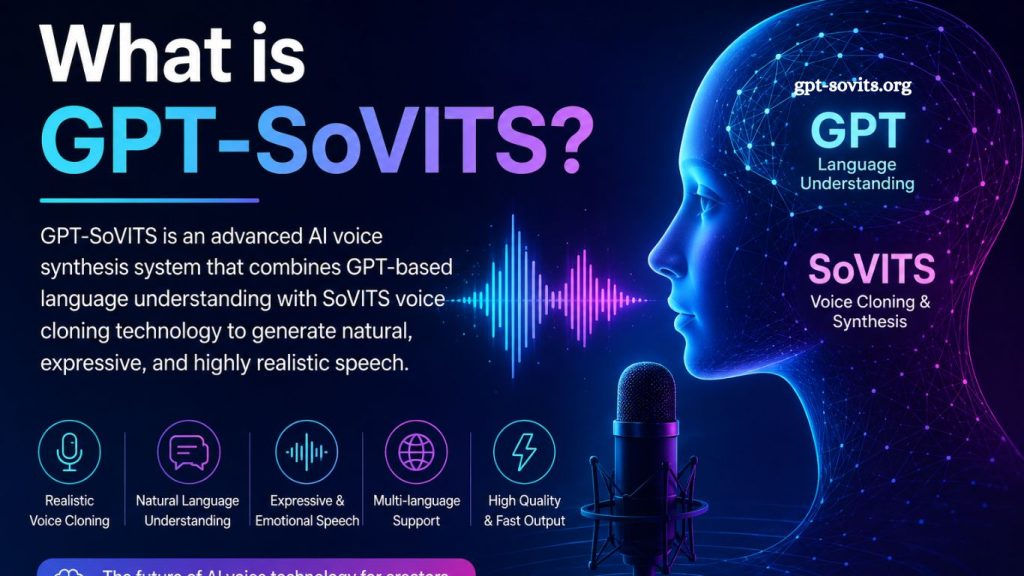
GPT-SoVITS is an advanced AI framework that merges two powerful technologies:
- GPT-based language modeling for understanding and generating text in a natural conversational structure
- SoVITS (Soft Voice Inference Text-to-Speech) for converting text into expressive, human-like speech using voice cloning techniques
Together, they create a system capable of producing highly accurate voice outputs that closely resemble real human speakers.
Unlike traditional text-to-speech systems that sound robotic or flat, GPT-SoVITS focuses on emotional expression, tone variation, and speaker similarity. This makes it especially useful for applications requiring natural voice interaction.
Read More: What is GPT-SoVITS?
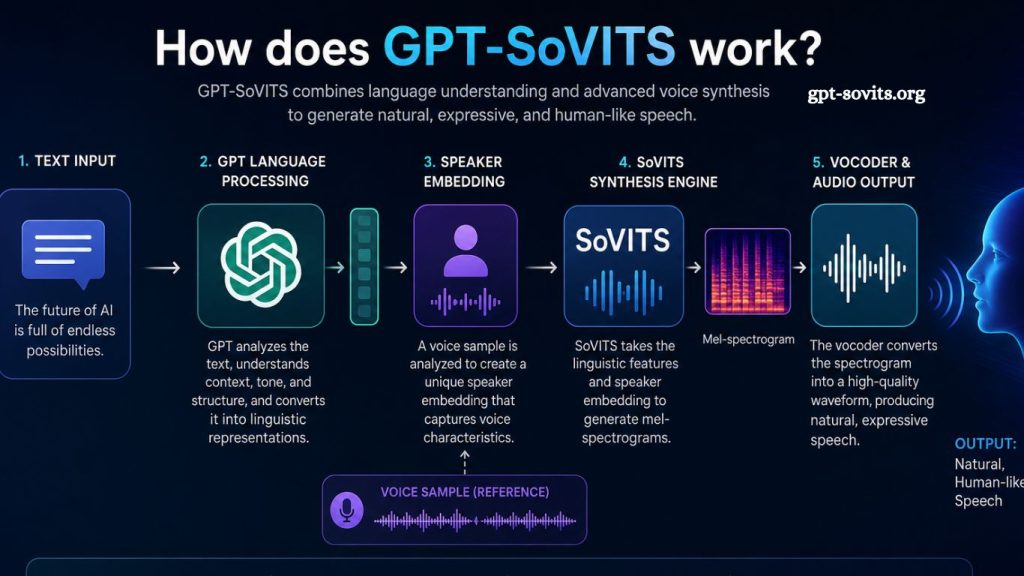
How GPT-SoVITS Works
The system operates through a multi-stage process that ensures both linguistic accuracy and vocal realism.
Text Processing with GPT Model
The GPT component analyzes input text, understanding context, grammar, and intent. It ensures the generated speech follows natural human language flow instead of mechanical reading patterns.
Voice Feature Extraction
SoVITS takes a short sample of a target voice and extracts key acoustic features such as pitch, tone, rhythm, and speaking style. This step allows the system to “learn” how a specific person sounds.
Speech Synthesis
After combining text understanding and voice characteristics, the system generates audio output. The result is speech that matches both the meaning of the text and the identity of the selected voice.
Fine-Tuning and Emotion Control
Advanced versions of GPT-SoVITS allow adjustments in emotion, speed, and emphasis. This gives creators more control over how the final voice sounds.
Key Features of GPT-SoVITS
GPT-SoVITS is gaining attention because of its powerful capabilities. Some of its standout features include:
Highly Realistic Voice Cloning
The system can replicate human voices with impressive accuracy, capturing subtle details such as accent, breathing patterns, and tone variations.
Low Data Requirement
Unlike older models that require hours of training data, GPT-SoVITS can produce usable results from very small voice samples.
Multilingual Support
It supports multiple languages, making it suitable for global applications such as content localization and international communication.
Emotionally Expressive Speech
The model does not produce monotone output. It can express emotions like happiness, sadness, excitement, or calmness depending on context.
Fast Processing
Optimized architecture allows relatively quick generation of speech compared to traditional deep learning voice systems.
Why GPT-SoVITS is Different from Traditional Text-to-Speech
Conventional text-to-speech systems rely on pre-recorded audio fragments or limited neural models. These often produce unnatural or repetitive voices.
GPT-SoVITS improves this by combining:
- Deep contextual understanding from GPT models
- Advanced voice cloning from SoVITS architecture
- Adaptive learning from minimal voice data
This hybrid approach creates a more flexible and realistic speech generation system.
The difference becomes especially noticeable in long-form speech, storytelling, and conversational AI where emotional depth and natural rhythm are essential.
Applications of GPT-SoVITS
GPT-SoVITS is being used across multiple industries due to its versatility. Below are some of its most impactful applications.
Content Creation and Voiceovers
YouTubers, podcasters, and video creators use GPT-SoVITS to generate professional voiceovers without hiring voice actors. It helps reduce production costs while maintaining high quality.
Gaming Industry
Game developers use AI-generated voices for characters, allowing dynamic dialogue generation and personalized gaming experiences.
Virtual Assistants
AI assistants become more human-like when powered by GPT-SoVITS, improving user engagement and communication quality.
Education and E-Learning
Educational platforms use it to create audio lessons, making learning more interactive and accessible.
Accessibility Tools
People with speech impairments benefit from voice cloning systems that allow them to communicate using a personalized synthetic voice.
Localization and Translation
Businesses use GPT-SoVITS to convert content into multiple languages while maintaining the original speaker’s voice identity.
Advantages of GPT-SoVITS
The growing popularity of GPT-SoVITS is driven by several key benefits:
- Reduces dependency on professional voice actors
- Saves time in audio production workflows
- Delivers consistent voice quality across content
- Enables scalable multilingual voice generation
- Enhances realism in AI-human interaction
These advantages make it a valuable tool for both individuals and enterprises.
Limitations and Challenges
Despite its strengths, GPT-SoVITS still faces certain limitations.
Data Sensitivity
While it requires less data than older models, voice quality still depends on the clarity and diversity of input samples.
Ethical Concerns
Voice cloning raises concerns about misuse, including identity replication and unauthorized voice generation.
Computational Requirements
High-quality output may require strong hardware or cloud-based processing systems.
Legal Considerations
Using someone’s voice without permission can lead to legal and ethical issues, especially in commercial environments.
Ethical Use of GPT-SoVITS
Responsible use of voice cloning technology is essential. Users should ensure:
- Proper consent before cloning any real voice
- Transparent disclosure when synthetic voices are used
- Avoidance of deceptive or misleading applications
Ethical AI usage helps maintain trust and prevents misuse of powerful technology.
Frequently Asked Questions
What is GPT-SoVITS used for?
GPT-SoVITS is used for AI voice cloning and text-to-speech generation. It helps create realistic human-like voices for videos, games, virtual assistants, and educational content.
How does GPT-SoVITS work?
It combines GPT-based language processing with SoVITS voice synthesis. The system analyzes text, learns voice features, and generates natural-sounding speech.
Can GPT-SoVITS clone any voice?
Yes, it can clone voices using small audio samples. However, quality depends on the clarity and length of the input voice data.
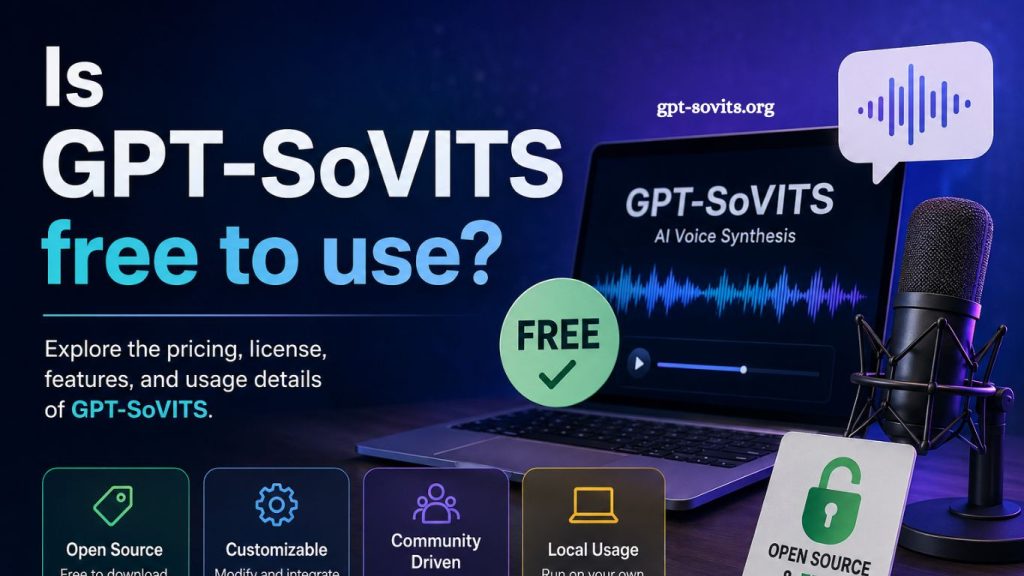
Is GPT-SoVITS free to use?
Some versions are open-source, while others may require paid tools or cloud services depending on implementation and usage scale.
What makes GPT-SoVITS different from traditional TTS?
Unlike standard text-to-speech systems, GPT-SoVITS produces more natural, expressive, and emotionally rich speech with better voice similarity.
Is GPT-SoVITS safe to use?
Yes, when used responsibly. Ethical use is important to avoid misuse such as unauthorized voice cloning or misleading content creation.
What are the main applications of GPT-SoVITS?
It is widely used in content creation, gaming, AI assistants, e-learning, accessibility tools, and multilingual voice generation.
Conclusion
GPT-SoVITS marks a significant advancement in AI-powered voice synthesis by combining intelligent language processing with highly realistic voice cloning. Its ability to generate natural, expressive, and human-like speech makes it valuable across industries such as content creation, education, gaming, and accessibility.