Voice cloning technology has evolved rapidly in recent years, reshaping how audio content is created, localized, and personalized. Among the emerging tools in this space, GPT-SoVITS has gained attention for its ability to generate highly natural speech that closely resembles real human voices. Understanding its capabilities, limitations, and real-world applications helps clarify one key question: Can GPT-SoVITS clone any voice?
Understanding GPT-SoVITS Voice Technology
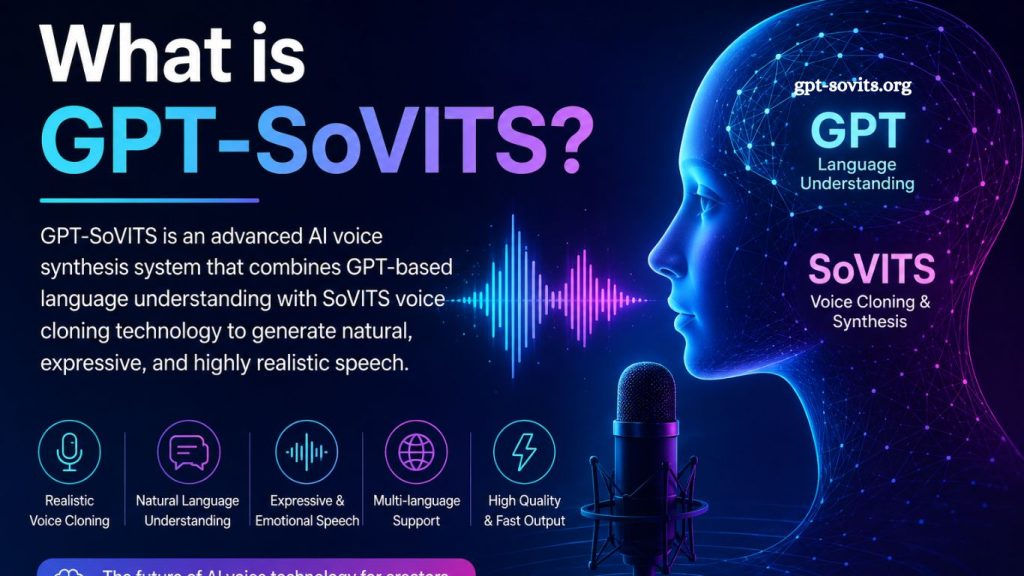
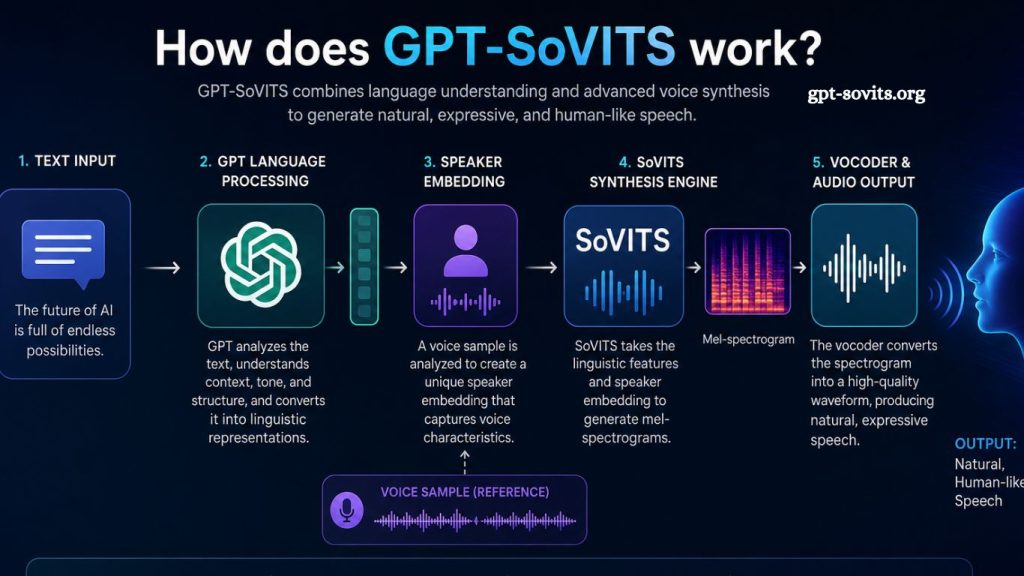
GPT-SoVITS combines two powerful approaches in artificial intelligence. GPT-style models handle language and contextual understanding, while SoVITS (Soft VITS) focuses on converting text into expressive, high-quality speech. Together, they enable a system that not only reads text but also mimics tone, rhythm, and emotional expression.
Voice cloning in this system relies on deep learning. The model analyzes audio samples of a target speaker and learns patterns such as pitch, pronunciation style, breathing rhythm, and vocal texture. Once trained, it generates new speech that sounds like the original speaker, even when the content is completely different.
Read More: GPT-SoVITS Free Usage: Is It Really Free to Use?
Can GPT-SoVITS Clone Any Voice?
GPT-SoVITS can replicate many voices with impressive accuracy, but it cannot clone every voice under all conditions. Several factors determine the quality and success of voice cloning.
Quality of Audio Samples
High-quality recordings play a critical role. Clear audio with minimal background noise allows the model to extract cleaner vocal features. Poor recordings, distorted speech, or heavily compressed audio reduce accuracy and naturalness in the cloned voice.
Amount of Training Data
More voice samples usually lead to better results. A system trained on only a few seconds of speech may produce a rough approximation, while several minutes or hours of clean audio can produce a much closer match. However, even large datasets cannot guarantee perfection if other conditions are not ideal.
Language and Accent Coverage
GPT-SoVITS performs better when the training language matches the output language. If a voice is trained on English audio but used to generate speech in another language, the result may lose natural pronunciation or accent accuracy. Accent variation also affects performance, especially for regional or mixed dialects.
Voice Uniqueness and Complexity
Highly distinctive voices with unusual pitch ranges, strong accents, or irregular speech patterns are harder to replicate. Standard voices with consistent tone and pronunciation are easier for the model to learn and reproduce.
Emotional and Expressive Range
Although GPT-SoVITS supports emotional speech synthesis, capturing subtle human emotions remains challenging. The model can simulate basic tones like neutral, happy, or sad, but complex emotional depth may not always sound fully authentic.
Strengths of GPT-SoVITS in Voice Cloning
Despite its limitations, GPT-SoVITS offers strong advantages, making it one of the more advanced voice synthesis systems available today.
High Naturalness of Speech
The generated voices often sound smooth and human-like. Unlike older text-to-speech systems that produce robotic output, GPT-SoVITS focuses on realism and fluid expression.
Fast Adaptation to New Voices
With sufficient training data, the system adapts quickly to new speakers. This makes it suitable for scalable applications that require multiple voices.
Multilingual Potential
GPT-based architecture supports multiple languages, enabling voice cloning across different linguistic environments, depending on the availability of training data.
Flexible Use Cases
The technology supports a wide range of applications, including content creation, dubbing, audiobook production, virtual assistants, and accessibility tools.
Limitations of GPT-SoVITS Voice Cloning
Even with advanced capabilities, the system does not perfectly replicate every human voice.
Dependence on Data Quality
Low-quality or inconsistent recordings lead to unnatural output. Clean, well-structured datasets remain essential for reliable results.
Ethical and Legal Boundaries
Voice cloning raises serious ethical concerns. Using someone’s voice without permission may violate privacy or intellectual property rights. Responsible use requires consent and compliance with regulations.
Difficulty with Rare Voices
Uncommon vocal characteristics or limited training samples reduce accuracy. The system performs best with balanced and representative data.
Occasional Artifacts in Speech
Some generated outputs may include glitches, unnatural pauses, or pronunciation errors, especially in complex sentences or unfamiliar languages.
Real-World Applications of GPT-SoVITS
Voice cloning technology is already transforming several industries.
Content Creation
Creators use synthetic voices for YouTube videos, podcasts, and social media content. It reduces production time and eliminates the need for repeated recording sessions.
Entertainment and Media
Film studios and game developers use voice synthesis for character dialogue, localization, and dubbing across multiple languages.
Accessibility Solutions
Voice cloning helps individuals who have lost their speech ability regain a personalized voice, improving communication and quality of life.
Customer Support Systems
Businesses deploy AI voices in automated systems to deliver consistent, scalable customer interactions.
Ethical Considerations in Voice Cloning
Responsible use of GPT-SoVITS requires awareness of ethical boundaries. Voice identity is deeply personal, and misuse can lead to misinformation, impersonation, or fraud. Consent-based usage ensures trust and protects individuals from unauthorized replication.
Transparency also plays an important role. Audiences should know when they are interacting with synthetic voices rather than real human speakers.
Frequently Asked Questions
Can GPT-SoVITS clone any voice perfectly?
GPT-SoVITS can closely replicate many voices, but perfect cloning is not guaranteed. Accuracy depends on audio quality, training data, and voice complexity.
How much audio is needed for voice cloning?
Better results come from several minutes of clean, high-quality speech, though basic cloning can work with smaller samples.
Is GPT-SoVITS voice cloning realistic?
Yes, it produces highly natural-sounding voices that often resemble real human speech with strong clarity and expression.
Can it clone voices in different languages?
It supports multiple languages, but performance is best when training and output languages are aligned.
Is voice cloning with GPT-SoVITS legal?
It is legal when used with proper consent. Unauthorized use of someone’s voice may violate privacy and copyright laws.
What affects voice cloning quality the most?
Audio clarity, background noise, dataset size, and consistency of the speaker’s recordings are the main factors.
Where is GPT-SoVITS used in real life?
It is used in content creation, dubbing, virtual assistants, accessibility tools, and AI-driven media production.
Conclusion
GPT-SoVITS represents a major advancement in voice cloning technology, delivering highly natural and expressive synthetic speech. Its ability to replicate voices with strong accuracy depends on data quality, language alignment, and voice characteristics. While it cannot perfectly clone every voice in every condition, it performs impressively in controlled scenarios with sufficient training material.